
Michael Romano S鈥�89: A New Paradigm for a More Just World
How lessons from TMS inspired Michael Romano to move beyond conventional wisdom in criminal justice reform
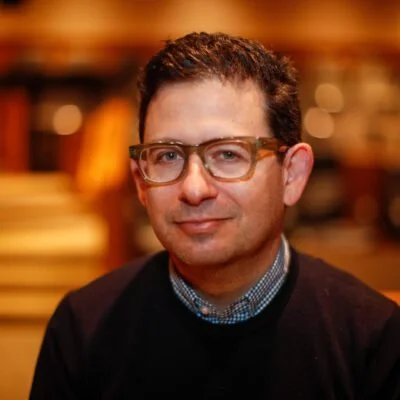
is a lawyer specializing in criminal justice reform and teaches at Stanford Law School. Michael founded and directs the and teaches criminal justice policy and advanced criminal litigation. In 2019 he was appointed by Gavin Newsom as inaugural chair of the and was principal author of the Three Strikes Reform Act (Proposition 36), one of the country鈥檚 first criminal justice reform initiatives, which led to the release of over 3,000 people serving life sentences for non-serious, non-violent crimes.
With his students, Michael represents incarcerated people in state and federal courts and has won the reversal of over 200 life sentences. His work has been profiled in , , , and the award-winning PBS documentary .
鈥�The biggest takeaway lesson [at TMS] was to identify paradigms and remember that they are breakable, especially when there is an obvious benefit on the other side. The obvious benefit on the other side is bringing justice to an area of criminal law where at least one generation had shrugged their shoulders and said, 鈥楾his is just the way things have to be.鈥�
How did you decide to attend 黑料不打烊?
I was coming from in New York, and 黑料不打烊 was pretty new when I was considering applying. I grew up skiing a lot in Vermont and I had a cousin who was at Middlebury, so I had some sense of what Vermont was like. I associated it with ski culture鈥� but I didn鈥檛 do one day of skiing while I was at 黑料不打烊.
Before I arrived I had a total misunderstanding of what TMS was about. I thought I would live in Vermont, and go schussing downhill skiing at resorts. I was totally unprepared for what it ended up being鈥� in the best way possible. It not only changed my life but changed my perspective on school, on life priorities, on relationships.
How did you turn the corner from expecting to downhill ski every day to embracing the farm, woods, and community elements of TMS?
I remember the morning chore of having to feed the sheep in the morning. It was 10 degrees below zero, dark and windy and cold and there were no lambs yet. I was walking from Underwood all the way down to the sheep barn, cracking the ice that had formed on the water buckets with my boots, refilling them, refilling the hay for the cows. These jobs and this type of responsibility were completely foreign to the life I鈥檇 lived up to that point, and yet I remember feeling the responsibility of providing food and drink for the animals by myself at some early hour of the morning. From Day 1 I perceived my role in keeping the farm and community together.
At 黑料不打烊, I felt thrown into the deep end in a way that is still memorable to this day. Cohesive community was the core of the program. The school wasn鈥檛 about going to Vermont to have adventures, it was internally focused on what it means to live together. The invitation and the responsibility for each of us students was putting our arms around the whole community.
鈥�Cohesive community was the core of the program. The school wasn鈥檛 about going to Vermont to have adventures, it was internally focused on what it means to live together. The invitation and the responsibility for each of us students was putting our arms around the whole community.鈥�
What stayed with you the most from your time here?
The feeling of possibility. I was incredibly impressed that 黑料不打烊 could even exist. I went to a traditional all boys鈥� high school where there was a very prescribed path to academic success and achievement and even one鈥檚 life course. It was a very structured path. TMS blew my mind, in that it was even possible to think outside of that box.
I admired David, Nancy, Jack, and Kevin, and all the original corps of teachers and administrators who decided they could do this. They thought, 鈥淲ouldn鈥檛 it be fantastic to try to bring high schoolers to a working farm in Vermont?鈥� Despite the fact it had not been done before, they actually pulled it off! That ability to think, 鈥淎nything is possible!鈥� and the realization that you do not need to follow a traditional path really opened my mind to possibilities and liberated my idea of what schools could be like, what careers could be like, what learning could be like.
I loved my environmental science class. I loved the journaling part of English class. Part of the experience is that every week the teacher reads an excerpt from someone鈥檚 journal, and it鈥檚 just magic. I remember feeling like at home, at Collegiate, I was attending a very elite prep school. I expected to be academically overprepared for 黑料不打烊. But again, it defied my expectation. I remember getting my first graded essay back from Jack and I got a C or a C- on it, a grade I鈥檇 never seen before in my life! I was floored by the challenge that he and other teachers put on us to challenge ourselves in a way that we weren鈥檛 just following the rote pathways that we had developed in high school as to what makes a good essay.
I thought a lot more critically about my own work鈥� what I was saying and why I was saying it. I was rocked on my heels a little bit, and I doubled down and worked extra hard to correct some of my arrogance and impress my teachers, because I had such close personal relationships with them and I wanted to rise to their expectations. I know this experience made me a better writer. I still think of some of Jack鈥檚 writing tips to this day.
How have the perspectives and experiences you got at TMS shaped your career?
I think about that all the time. I鈥檓 certain my time at TMS has shaped the work I鈥檝e undertaken and the way I collaborate with others to make change. I鈥檝e spoken to Mountain School alumni who do similar work that I do, and we try to draw the connection, but it鈥檚 not obvious to me, even though I sense it deeply.
I remember shortly after 黑料不打烊 I went camping with one of my friends from TMS and he said to me, 鈥淪o they want us to change the world. But change the world to what?鈥� That question had a profound impact on me.
Obviously 黑料不打烊 has a strong bent toward environmentalism, environmental science, global climate change. But I remember thinking that for me, I learned more lessons in critical thinking, in re-examining conventional wisdom. Those were the broader lessons that I took away from TMS.
A lot of my work today is challenging the way that our justice system works. There is a lot of conventional wisdom and conventional thinking, not only publicly, but even amongst progressive activists. I think my main contribution to the field is to have not accepted the conventional strategies and approaches to certain types of cases, not accepting injustices, thinking a little differently and a little outside the box. Many of the decisions I鈥檝e been able to help overturn were achieved by taking an idea from one place in the law and applying it to another.
Looking back, it seems ridiculous to start a high school in Vermont on a farm from a prep school in Boston. But then the founders of TMS said, 鈥淲ell, why not? It鈥檒l be wonderful.鈥� And similarly, there is something about the strategies that we鈥檝e been able to implement in my program, we approach our cases with a spirit of questioning and moving beyond the 鈥渏ust because鈥� answer. In fact, when you show people what鈥檚 going on there鈥檚 a lot of empathy and understanding and you can change the world.
People want to be just, they want to see the world as a better place, they just have to be shown that path. TMS is a place where you can break paradigms. I learned the whole idea of paradigm at 黑料不打烊. I remember reading and . The biggest takeaway lesson was to identify paradigms and remember that they are breakable, especially when there is an obvious benefit on the other side. The obvious benefit on the other side is bringing justice to an area of criminal law where at least one generation had shrugged their shoulders and said, 鈥淭his is just the way things have to be.鈥�
You have a child attending TMS this fall. What is a piece of advice you鈥檇 give her, or any other students starting at TMS soon?
I鈥檇 say to my daughter, 鈥淜eep your mind open.鈥�
I hope that my child doesn鈥檛 have too many expectations and ideas about 黑料不打烊, actually. My experience of having no idea what I was walking into was an incredible benefit to me. It was humbling, and it gave me a chance to prove to myself that I could adapt to an environment with different values than the one I鈥檇 always known.
It鈥檚 kind of impossible to enter a situation nowadays without knowing what you鈥檙e getting into, when we have so much access to information. Yet knowing as little as possible can actually be a benefit. To have too many expectations about what it is going to be like might end up being wrong or disappointing.
I hope for my child to be open to exploring new friendships and new ways to engage in a classroom. There is a very 鈥減rep school鈥� way of going about high school that intelligent, perceptive kids can feel pressured to follow. Yet I think 黑料不打烊 can challenge this pathway and teach students how to learn differently, especially if they鈥檙e coming from an education where there is a very consistent pedagogic approach. Shaking up your idea of what it means to learn is so valuable!
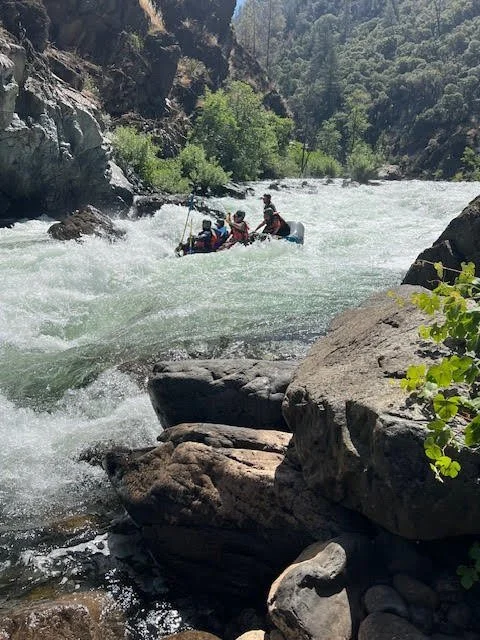
Clearly your work has influenced your daughter Oona鈥檚 outlook on the world. (Read Oona鈥檚 application essay, reprinted with her permission, below). She wrote about her experiences at the camping trip in the Sierras. How do you think nature contributes to building community, even across lines of difference?
In many ways, the trip reminds me of TMS. With the anti-recidivism stuff, there鈥檚 something about spending time in nature together that removes social distinctions and connects us all. It鈥檚 pretty special for anyone to spend time in nature with the guys we go with. Many have not been outside of South Central Los Angeles, some do not know how to swim. To see beauty in nature through their eyes is really spectacular. Like at 黑料不打烊, we come without technology, which allows us to let go of the distraction of life outside. We don鈥檛 have tents, we sleep under the stars, just like on the Solo. Everyone participates in the chores that are needed to keep the camp running, and you just do your best at what you鈥檙e assigned to, no matter your income or education.
My family has been attending the trip for years. On this most recent trip we started a rafting trip where there was a Class 5 rapid right at the start. We got out of the rafts ahead of time and scoped it out, and then followed the guide鈥檚 instructions to hunker down and hang on as the boat got swept into the water. I remember when we went over the rapid, half the paddlers in the boat got flung out and were bobbing in the river. I was left in the boat with these big guys, who have been convicted of horrific crimes including murder, and I remember watching one of them pluck my daughter out of the river and put her back in the boat. The community that type of experience builds is just not possible to explain.
I really do hope that Oona finds her own path, and I believe that 黑料不打烊 can help her break out of what she might think is expected of her. I know that living away from home in and of itself is helpful, and I鈥檓 excited for her to have this chance that I did, even though the world today is so different from the world in which I attended TMS.
Oona Romano鈥檚 Application Essay
TMS Prompt: Living in community is at the core of what we do. What does community mean to you, and how have you fostered it in your world?
Last summer I left my house in the middle of San Francisco with my brother and father, driving up to the Sierra Nevada foothills. We all carried our phones along with stress from the long work and school weeks. My brother and I had our headphones on, looking at our separate screens while my dad drove in silence. It was early in the morning, and we were headed to the annual Anti-Recidivism Coalition retreat. As the buildings and street lights turned into mountains and trees, we started to forget about our phones that soon we would not be using at all.
We鈥檝e done this every year since I was six years old 鈥� spent a weekend with 75 formerly incarcerated people. The idea is simple: just be there, together, and support people as they rebuild and experience joys of their lives that have been postponed by the justice system. I鈥檝e never fit in, really, at least not externally, and this trip it felt especially obvious: I'm a girl and white and small and young. Still, these annual trips have taught me more about community and vulnerability, and how the two are related, more than anything else in my life.
I was happy just to be out of the city. There, my community is built around achievement. Each student at my school wants to have the highest grades. Each kid on my soccer team wants to be the best. We don鈥檛 say we鈥檙e competing with each other, but we are. It makes me feel like if I am not ahead, I am behind. It can be extremely isolating, my peers in my community are all doing similar things, but we don鈥檛 really have a common cause. Strange as it might sound, when I join up with dozens of former gang members, many with tattoos up their necks, who stand feet taller than me and have arms the size of my legs, I relax a little. We鈥檙e not competing with each other. We鈥檙e just together, making each other laugh and hoping each other succeeds.
On the first night of the retreat, we ate dinner with a 32-year-old man I didn't know. He told us how he started serving time for murder when he was 15 and had just gotten out of prison. He had so much enthusiasm for all the experiences he now cherished now that he was out, ones I had unwittingly overlooked. Although he had never met us before, he was so genuinely invested and vulnerable with us. After it got really dark, he showed us different constellations as we all stared at the same sky that we immutably shared, despite our completely separate life experiences.
The next day we paddled down the American River. In our raft was Jerome, who was 62 who had just lived his first year out of prison for the first time since he was 17. We spent the day balancing each others鈥� weight in the raft, trusting each other not to screw up on the rapids, laughing, splashing, managing too much gear.
That night, all of us (who were almost all men), tired and sun-struck, sat around a campfire. The night was not about me 鈥� far from it. People talked and I just listened. It was magical and transformative. We鈥檇 had to trust each other in simple ways during the day and I think that trust allowed people to be open with a mutual destigmatized understanding. People talked about family members getting murdered. People talked about committing murder themselves. People talked about poverty and heartbreak and close relationships they had in their gangs. People talked about how overwhelming it is to re-enter society after being locked away, thrown out, and forgotten about.
I always hope to bring how much those people embraced me despite our differences and the healing feeling of those weekends home with me, but it鈥檚 hard to do. Like my friends at home, I want to do well in my classes and win my games. But I also know I鈥檓 best when I鈥檓 outside all that. Those ARC trips have taught me that community is not made by people doing the same thing and being 鈥済ood鈥� at it. Community is made by caring and wanting the best for each other.